From
Reporting
to Action
A unified performance planning system for 20,000+ managers and 150,000+ employees — without adding to anyone’s workload.
Managers juggling 3–4 tools to do one thing. Most gave up.
Guided, not instructed. A conversation, not a form.
20k+ managers. 150k+ employees. One connected system.
The Problem
Three tools. Zero connection between them.
Managers were bouncing between three or four disconnected systems to do one thing: give meaningful feedback and set performance plans for their teams. Each tool held a piece — goals here, feedback there, 1:1 notes somewhere else — but nothing talked to anything else.
The result was that most managers defaulted to gut feeling, or skipped the process entirely. Not because they didn’t care — because the tools were working against them.
One platform replacing three — goals, feedback, and 1:1s in a single connected surface.
The Users
Three roles. Very different needs.
Managers needed to create plans quickly without re-entering information from other systems. Their time is scarce; the tool had to meet them where they were.
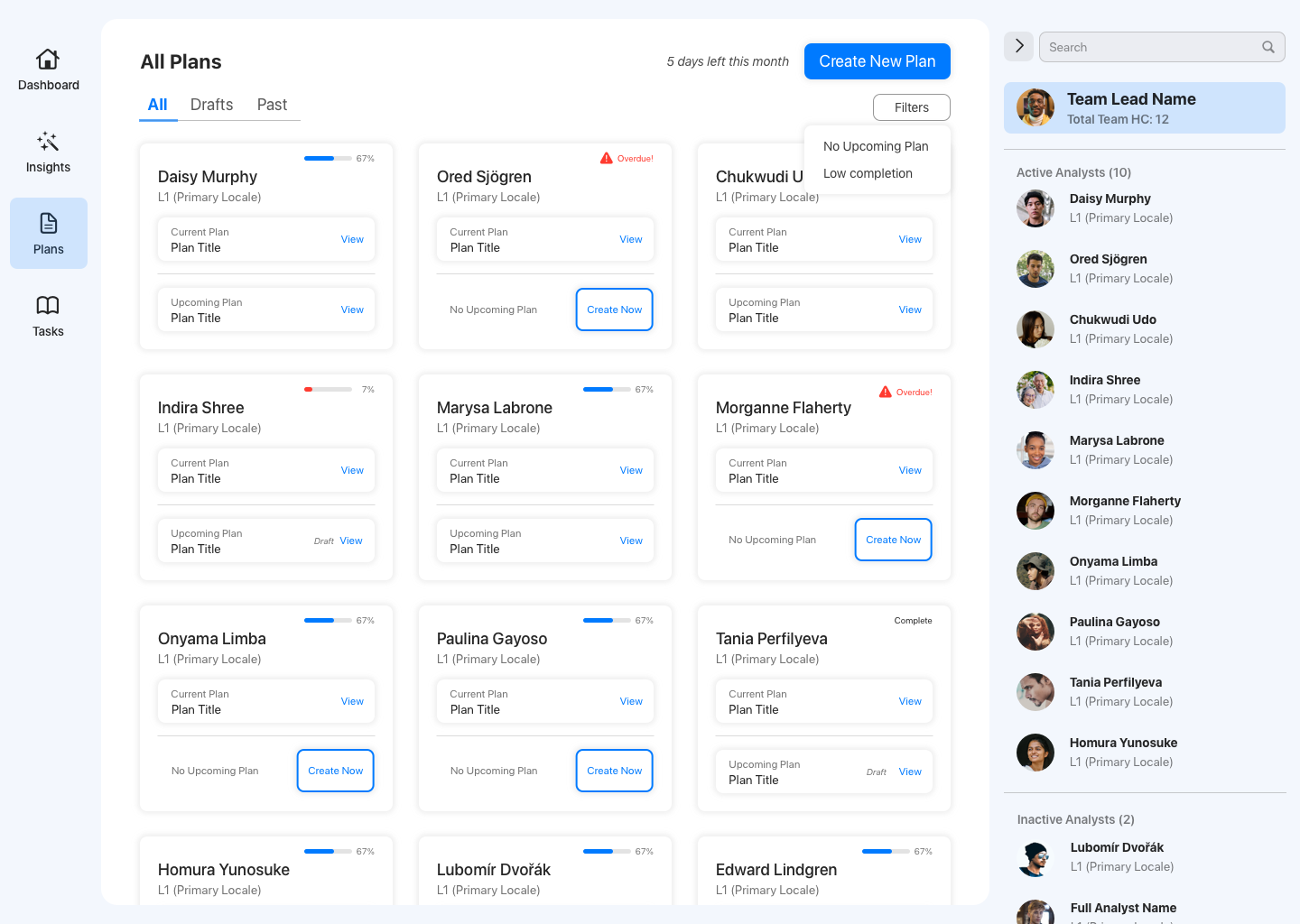
Senior managers needed visibility across their org — not just their direct reports, but rollups that helped them spot patterns and gaps without micromanaging.
Employees needed clarity. What’s expected of them, where they stand, and what the path forward looks like.
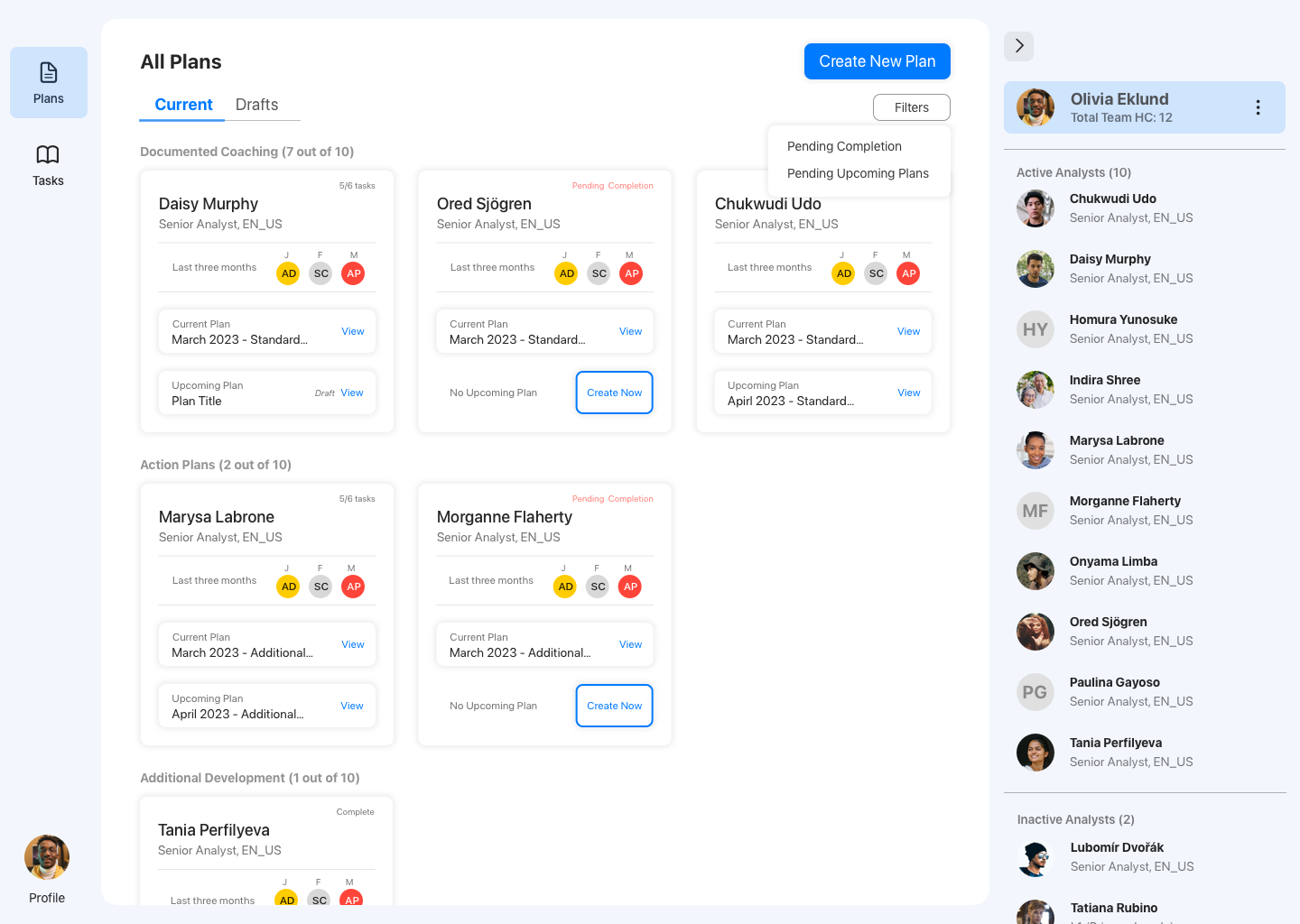
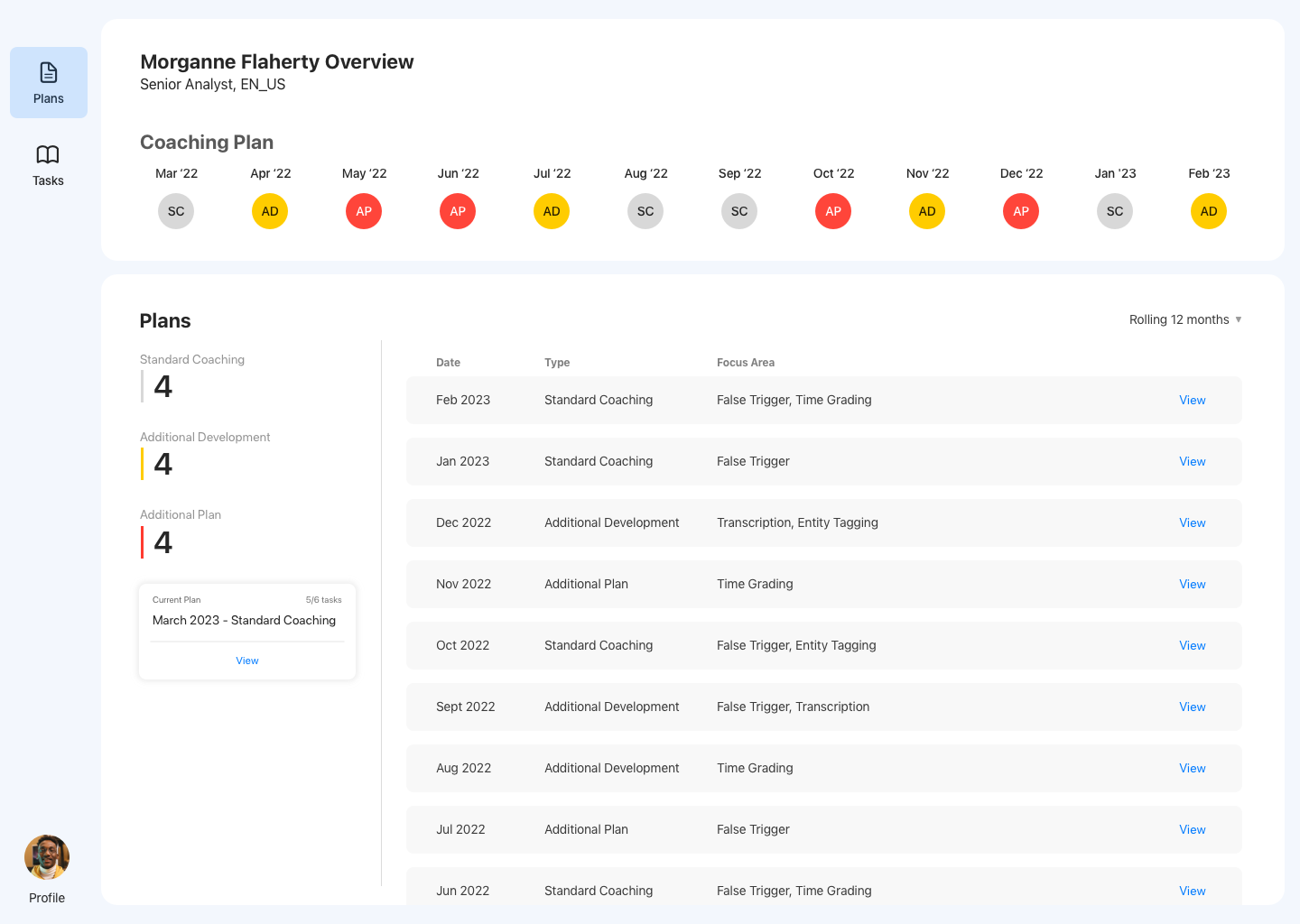
Same system, different views — tailored to each role without forking the product.
Design Moves
Guided, not instructed.
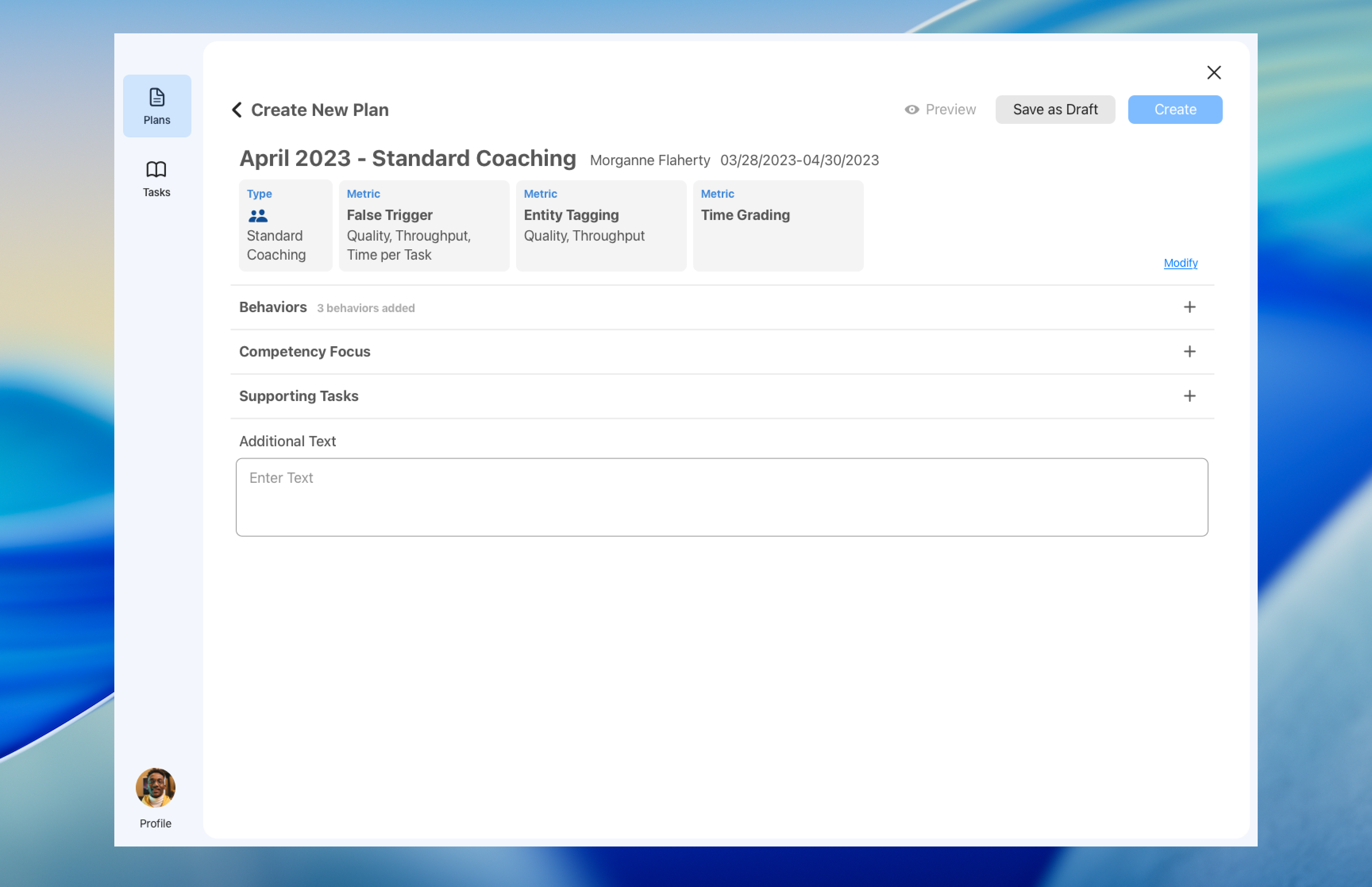
The plan creation flow was the hardest part to get right. Early versions felt like filling out a form. Later versions felt like having a conversation. The difference was in how we sequenced decisions — surfacing the right question at the right moment, pre-filling what we already knew, and letting the system handle the repetitive parts.
Plan creation flow — guided steps that feel like a conversation, not a form.
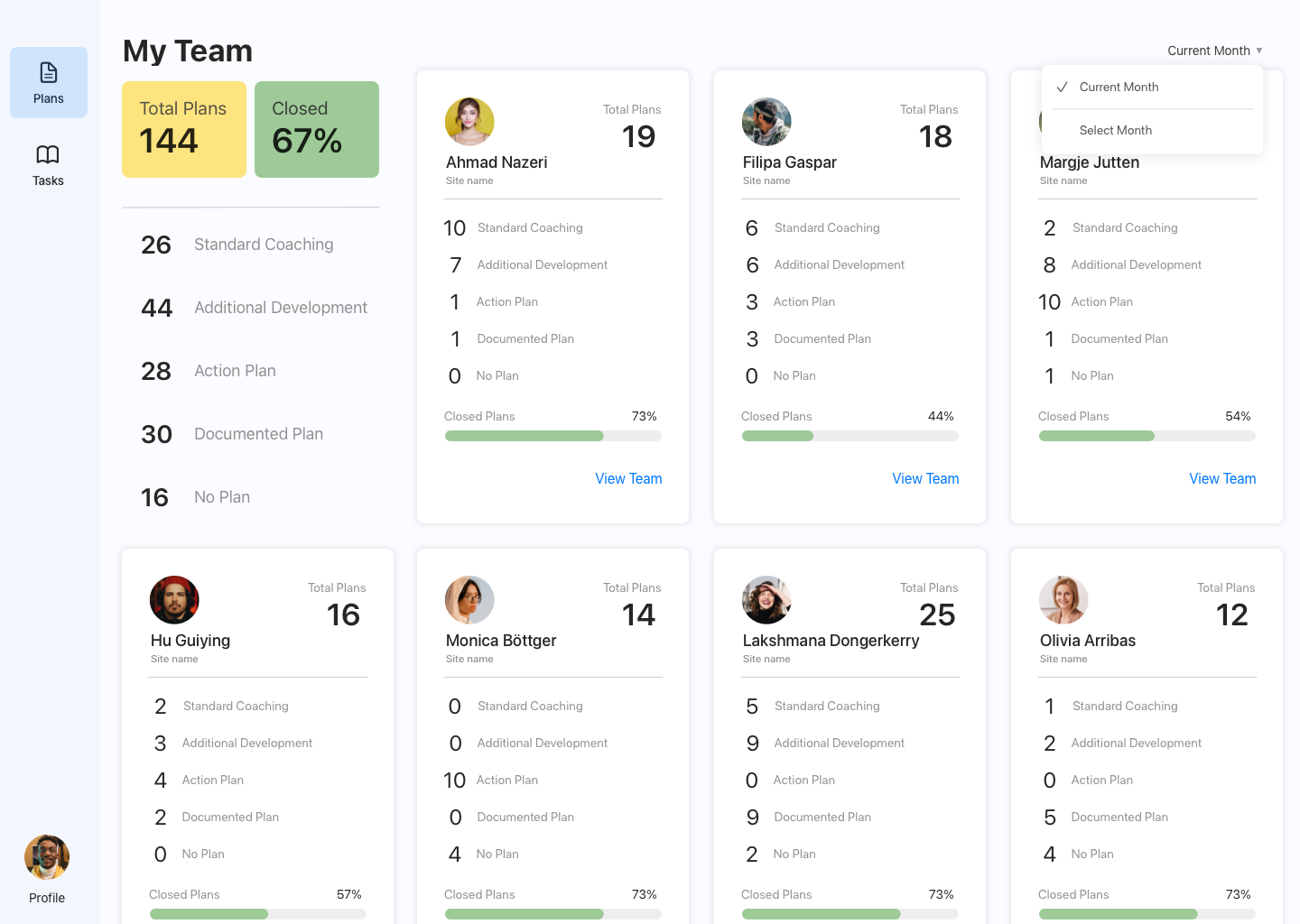
Senior manager dashboard — org-level visibility without losing individual context.
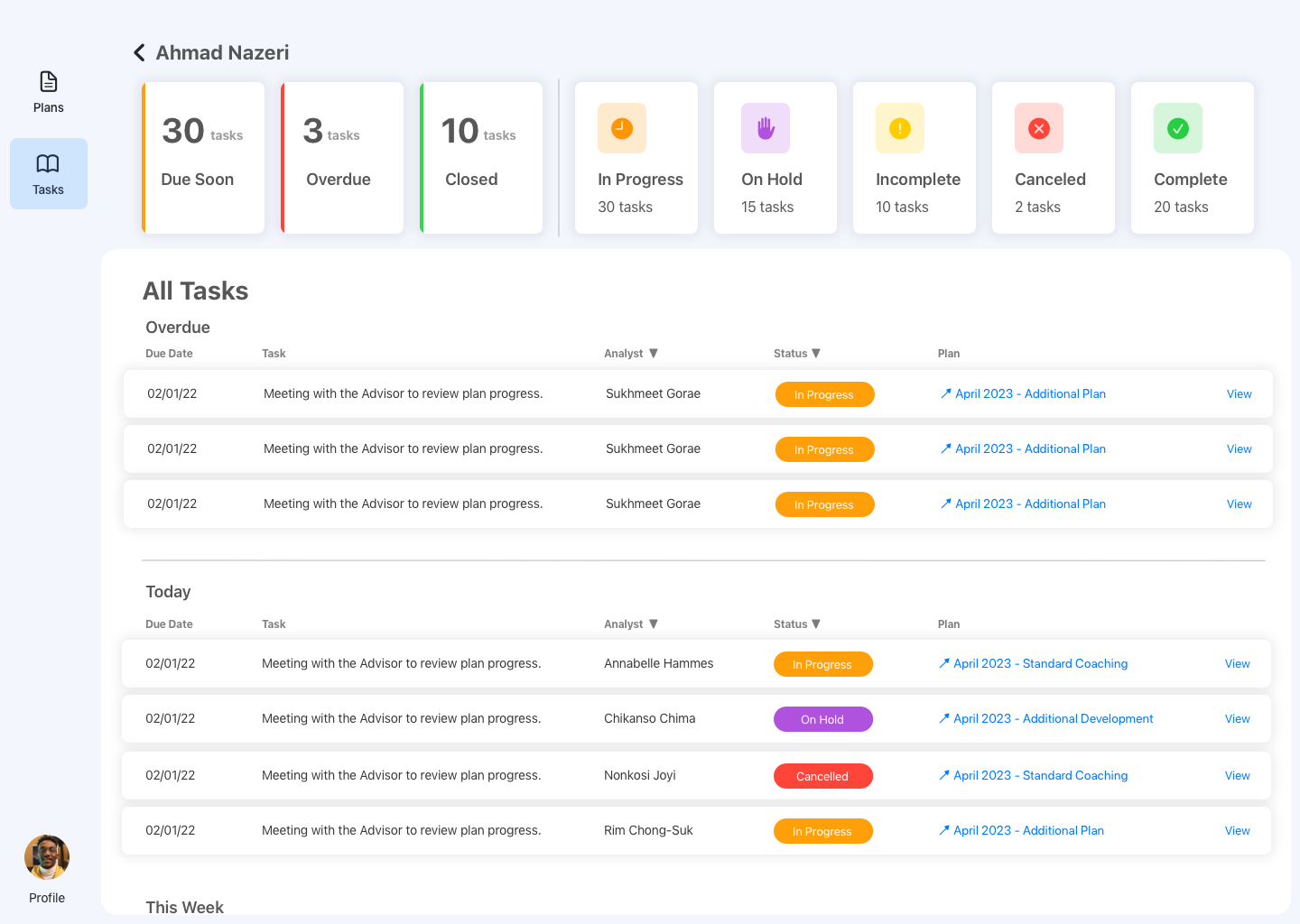
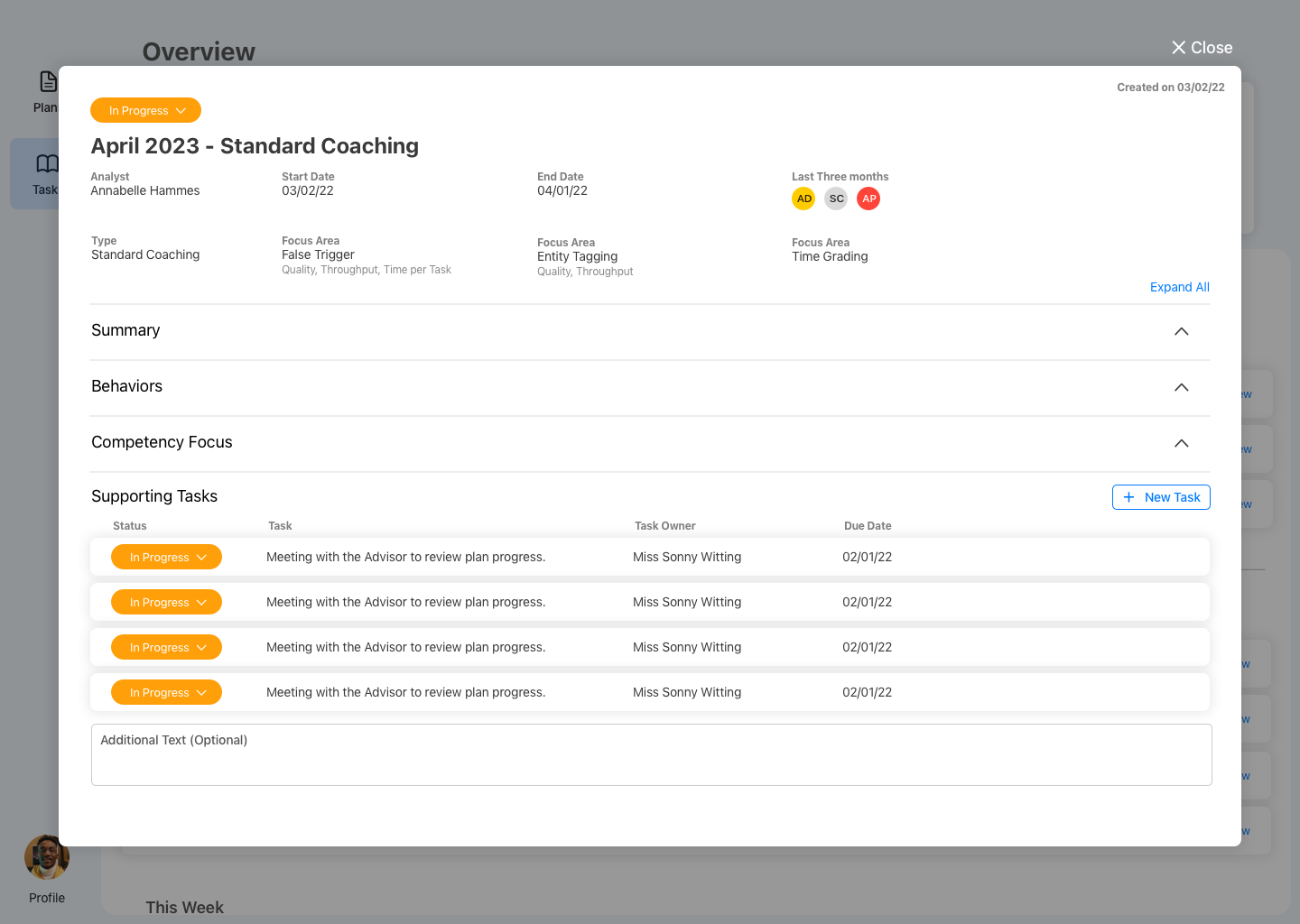
Task tracking and a shared library — reducing repetition across plans.
1
Platform replacing 3–4 disconnected tools
20k+
Managers on a unified system
150k+
Employees with clearer paths forward
“When the system does the organizing, people can focus on what actually matters.”